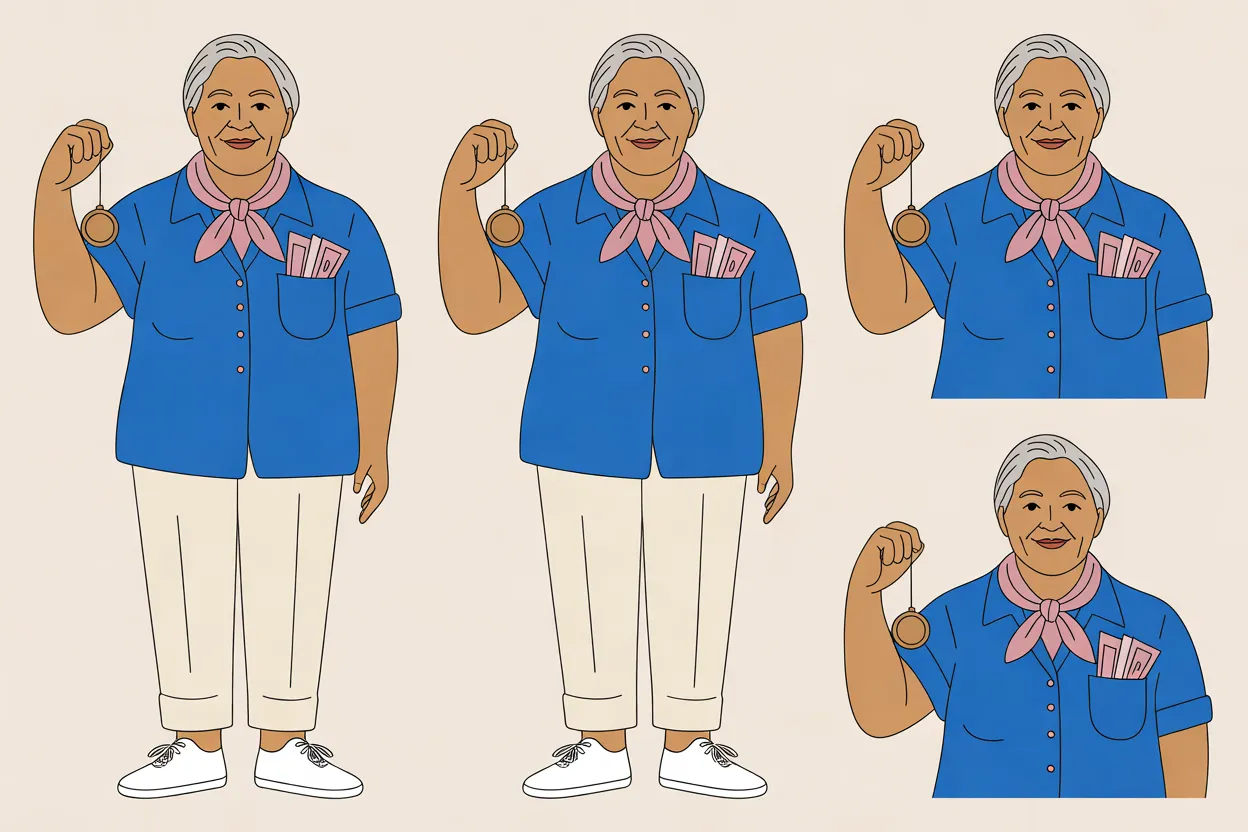
A scene from your world
The eleventh note
The Chime Driver takes the truck out of the depot at a quarter past seven, the way she has every evening since June, except that tonight is the last night of the route and the whole valley seems to know it. The truck is cream with one blue stripe and rounded at every corner, and it hums the way old freezers hum. The brass chime box hangs on its hook by the wheel. She winds the window down before she is out of the yard.
The chime goes ahead of her, two streets at a time. It plays an old waltz, slowly, and it has played it with one note missing for eleven summers: the eleventh note, near the end, is simply not there. Nobody on the route seems to mind. If you watch the porches closely, you can see people hum the gap without noticing they are doing it.
She drives at five miles an hour with one elbow out. On Larkspur a man in a bathrobe lifts his garden hose in salute. On Oleander two neighbors who have argued over a hedge all summer stop arguing long enough to wave. A woman in hospital scrubs, home late, sits on her front step with her shoes in her lap and listens to the waltz go by. Porch lights come on in ones and twos. On means someone is home; off means they are away at the coast. The truck slows down for both.
At eight the sprinklers start, street by street, in an order she could recite with her eyes shut. They tick across the lawns, tsk, tsk, tsk, throwing slow silver arcs that catch the last pink of the sky, and the truck rolls through the drift with the window down and comes out the other side smelling of cut grass. This is the second route, the one under the first. She has driven both for years.
The last street is Primrose Court, a cul-de-sac at the top of the hill where the route runs out of road. She takes it the way she always does, one slow lap of the circle, and pulls in at the curb by the middle lawn. Every porch light on the court is on. The waltz starts again from the top.
Then the Primrose sprinklers come on, all at once, a minute early. The old brass head in the middle lawn, the one that has stuck every summer since anyone can remember, coughs, catches and begins to tick, and it ticks exactly where the missing note should be. The waltz reaches the gap and the gap is full. For the first time in eleven summers the tune comes out whole, and on every porch around the court nobody says a word.
She lets it play to the end. Then she switches the chime off, sits for a minute with the engine running and the window down, and listens to the sprinkler keep time. When she drives home she goes the long way, around the block one more time, slower than the song.